发表在《英国医学杂志》上的一项为期30年的美国研究发现,过量食用超加工食品,尤其是肉类、家禽、海鲜产品、含糖饮料、乳制品、甜点和早餐食品,与略高的死亡风险有关。虽然研究表明饮食质量可能会减轻一些风险,但研究结果支持限制某些超加工食品以获得更好的长期健康。该研究还呼吁制定更细致的食品政策和全球干预措施,以加强公共卫生。
发表在《英国医学杂志》(the BMJ)上的一项为期30年的美国研究表明,食用大量超加工食品会略微增加死亡风险。直接食用的肉类、家禽、海鲜产品、含糖饮料、以乳制品为基础的甜点和高度加工的早餐食品与健康关系最为密切。
研究人员表示,并不是所有的超加工食品都应该受到普遍限制,但他们的发现“为长期健康限制某些类型的超加工食品的消费提供了支持。”
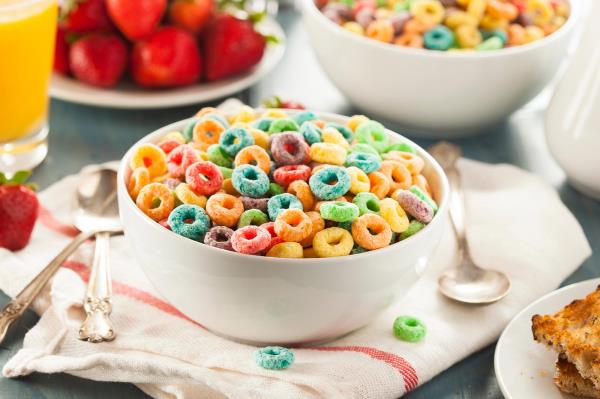
超加工食品包括包装好的烘焙食品和零食、碳酸饮料、含糖谷物、即食食品或加热食品。它们通常含有色素、乳化剂、香料和其他添加剂,通常含有高能量、添加糖、饱和脂肪和盐,但缺乏维生素和纤维。
越来越多的证据表明,超加工食品与肥胖、心脏病、糖尿病和肠癌的高风险有关,但很少有长期研究调查超加工食品与所有原因和特定原因导致的死亡之间的联系,尤其是癌症导致的死亡。
研究方法
为了解决这一知识差距,研究人员在护士健康研究(1984-2018)中追踪了来自美国11个州的74,563名女性注册护士的长期健康状况,并在健康专业人员随访研究(1986-2018)中追踪了来自美国所有50个州的39,501名男性健康专业人员,他们在研究入组时没有癌症、心血管疾病或糖尿病史。
参与者每两年提供他们的健康和生活习惯信息,每四年完成一份详细的食物调查问卷。总体饮食质量也使用替代健康饮食指数-2010 (AHEI)评分进行评估。
在平均34年的随访期间,研究人员确定了48193例死亡,其中13557例死于癌症,11416例死于心血管疾病,3926例死于呼吸系统疾病,6343例死于神经退行性疾病。
与摄入超加工食品最少的四分之一(平均每天3份)的参与者相比,摄入超加工食品最多的四分之一(平均每天7份)的参与者总死亡风险高出4%,其他死亡风险高出9%,包括神经退行性死亡风险高出8%。
没有发现心血管疾病、癌症或呼吸系统疾病与死亡有关。
在绝对数字上,超加工食品摄入量最低和最高四分之一的参与者因任何原因死亡的比率分别为每10万人年1472人和1536人。
对膳食品质的影响
The association between ultra-processed food intake and death varied across specific food groups, with meat, poultry, and seafood-based ready-to-eat products showing the strongest and most consistent associations, followed by sugar-sweetened and artificially sweetened beverages, dairy-based desserts, and ultra-processed breakfast food.
And the association was less pronounced after overall dietary quality was taken into account, suggesting that dietary quality has a stronger influence on long-term health than ultra-processed food consumption, note the authors.
This is an observational study, so no firm conclusions can be drawn about cause and effect, and the authors point out that the ultra-processed food classification system does not capture the full complexity of food processing, leading to potential misclassification. In addition, participants were health professionals and predominantly white, limiting the generalizability of the findings.
However, this was a large study with long follow-up, using detailed, validated, and repeated measurements, and results were similar after further analyses, providing greater confidence in the conclusions.
The researchers stress that not all ultra-processed food products should be universally restricted and say oversimplification when formulating dietary recommendations should be avoided.
But they conclude: “The findings provide support for limiting consumption of certain types of ultra-processed food for long-term health,” adding that “future studies are warranted to improve the classification of ultra-processed foods and confirm our findings in other populations.”
In a linked editorial, researchers in New Zealand point out that recommendations to avoid ultra-processed food may also give the impression that foods that are not ultra-processed, such as red meat, can be frequently consumed.
They argue that debate about the ultra-processed concept must not delay food policies that improve health, such as restrictions on marketing unhealthy foods to children, warning labels on nutritionally poor food products, and taxes on sugary drinks.
“Our focus should be on advocating for greater global adoption of these and more ambitious interventions and increasing safeguards to prevent policies from being influenced by multinational food companies with vested interests that do not align with public health or environmental goals,” they conclude.
Reference: “Association of ultra-processed food consumption with all cause and cause specific mortality: population based cohort study” by Zhe Fang, Sinara Laurini Rossato, Dong Hang, Neha Khandpur, Kai Wang, Chun-Han Lo, Walter C Willett, Edward L Giovannucci and Mingyang Song, 8 May 2024, BMJ.
DOI: 10.1136/bmj-2023-078476
The study was funded by the US National Institutes of Health.